
How to Clean Plantation Shutters: A Simple Step-by-Step Guide
Plantation shutters are one of the most popular window coverings in Australian homes, and for good reason. They look great, control light beautifully, and last for years when looked after properly. The good news is that cleaning plantation shutters is straightforward and takes very little time once you know the right approach.
Whether you have basswood, thermopoly or aluminium shutters, this guide walks you through everything you need to know to keep them looking their best. We also cover material-specific care tips and what to watch for if you live near the coast in the Wollongong or Illawarra region, where salt air and humidity can affect your shutters over time.

What You Will Need
Before you start, gather a few simple household items. You will not need any specialist products or expensive tools.
Microfibre cloths (two or three, one for damp cleaning and one for drying)
A soft-bristle brush or feather duster
Vacuum cleaner with a soft brush attachment
A small bowl of lukewarm water
Mild dish soap (a few drops is all you need)
An old toothbrush for hinges and tight corners
Optional: white vinegar for stubborn spots or mould
How to Clean Plantation Shutters Step by Step
Step 1: Remove Loose Dust
Start by opening the louvres fully so you can reach both sides. Using a feather duster, dry microfibre cloth or the soft brush attachment on your vacuum, gently wipe each louvre from top to bottom. Always work downward so that dust from the upper slats does not resettle on clean ones below.
Tilt the louvres in the opposite direction and repeat the process to catch dust on the other side. This step alone is usually enough for a routine weekly clean.
Step 2: Wipe Down with a Dry Cloth
After dusting, take a clean, dry microfibre cloth and wipe each louvre individually. This picks up any fine particles the duster missed and brings back the natural sheen. Run the cloth along the frame and stiles as well, paying attention to the edges where dust tends to build up.
Step 3: Spot-Clean with a Damp Cloth
For marks, fingerprints or light grime, dampen a microfibre cloth with lukewarm water and a small amount of mild dish soap. Wring the cloth out thoroughly so it is barely damp, not dripping. Wipe the affected areas gently, following the grain on timber shutters.
Important: Never soak your shutters or leave standing water on the surface. Excess moisture can cause timber to swell and warp over time. For PVC and thermopoly shutters, a damp cloth is perfectly safe, but you should still dry them afterwards.
Step 4: Clean the Hinges and Corners
Dust and grime love to hide in the hinges, louvre pins and where the slats meet the frame. Use an old toothbrush or a small soft-bristle brush to gently dislodge any buildup in these areas. A quick pass with the vacuum brush attachment will remove whatever you have loosened.
Step 5: Dry Thoroughly
If you used a damp cloth at any stage, go over the shutters with a dry microfibre cloth immediately afterwards. Open your windows to allow airflow and speed up drying. This is especially important for timber shutters, which can absorb moisture if left wet.
Cleaning Tips by Shutter Material
Not all plantation shutters are made from the same material, and each type has slightly different care requirements. Here is what to keep in mind for the most common options.
Basswood and Timber Shutters
Real timber shutters are beautiful, but they are more sensitive to moisture than other materials. Stick to dry dusting for routine maintenance. If you need to use a damp cloth, wring it out until it is almost dry, wipe quickly and follow up with a dry cloth straight away. Never use a soaking wet cloth or spray water directly onto timber louvres.
Avoid furniture polish and silicone-based sprays, as these can leave a sticky residue that attracts more dust over time.
Thermopoly and PVC Shutters
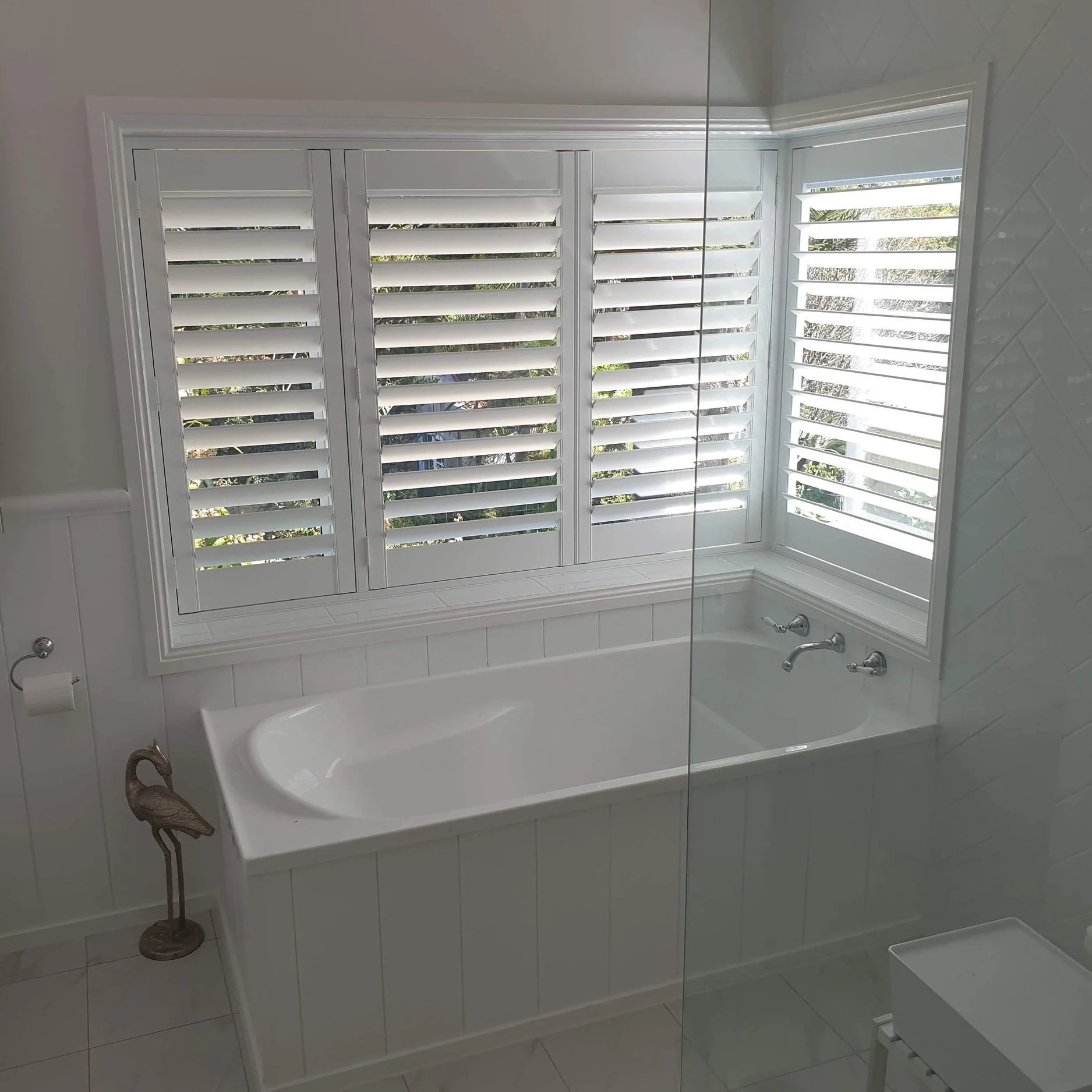
Thermopoly shutters are highly moisture-resistant, which makes them ideal for bathrooms, kitchens and laundries. You can be a little more generous with a damp cloth on these compared to timber. A mild soap-and-water solution works well for general grime, and you can rinse lightly with a clean, damp cloth afterwards. Just dry them off to avoid water spots.
Aluminium Shutters
Aluminium shutters are the toughest of the lot and can handle a more thorough wipe-down. They are also a popular choice for outdoor areas and alfresco spaces across the Illawarra, where they are exposed to the elements. Clean them with warm soapy water, rinse with a clean cloth and dry. For outdoor aluminium shutters, a gentle hose-down followed by a wipe is perfectly fine.
How to Remove Stubborn Stains and Mould
If you notice a stubborn mark that will not budge with regular cleaning, try making a paste with baking soda and a few drops of water. Apply it gently with your finger or a soft cloth, let it sit for a minute, then wipe it away with a damp cloth. Test this on a hidden area first if your shutters are timber.
For mould or mildew, which can appear on shutters in humid rooms like bathrooms, mix equal parts white vinegar and water in a spray bottle. Spray lightly onto a cloth (not directly onto the shutter), wipe the affected area and dry immediately. This method works well on thermopoly and PVC shutters. If you spot mould on timber shutters, it is worth getting professional advice, as the moisture source needs to be addressed first.
How Often Should You Clean Plantation Shutters?
Plantation shutters are low-maintenance by nature, which is part of their appeal. Here is a simple schedule to keep them in top condition:
Weekly: A quick dust with a dry cloth or feather duster once a week is all you need to prevent buildup.
Monthly: Give the shutters a more thorough wipe-down with a damp cloth, paying attention to hinges and corners.
Every six months: Twice a year, do a deeper clean of all shutters in your home. This is a good time to check for any damage, loose hinges or signs of wear.
If your home is near the coast or in a dusty area, you may want to dust more frequently. Homes closer to the beach in suburbs like Thirroul, Austinmer or Shellharbour often accumulate salt residue faster, so a fortnightly wipe-down is a good idea.
Caring for Shutters in the Illawarra's Coastal Climate
Living near the coast in Wollongong and the Illawarra has plenty of perks, but salt air and humidity can take a toll on window coverings if they are not looked after. Here are a few tips to protect your plantation shutters in a coastal environment:
Wipe away salt buildup regularly. Salt can settle on indoor surfaces, especially in homes within a few kilometres of the beach. A regular wipe with a damp microfibre cloth removes salt before it has a chance to cause damage.
Choose the right material for the room. If you are choosing shutters for a bathroom, kitchen or any room with higher humidity, thermopoly or PVC shutters are a smart choice. They resist moisture far better than timber and will not warp or swell in humid conditions.
Keep rooms well ventilated. Good ventilation helps reduce condensation on your shutters, especially in bathrooms. Open a window or use an exhaust fan after showers to let the moisture escape.
Hose down outdoor shutters. If your aluminium shutters are installed outdoors or in a semi-exposed alfresco area, give them a gentle hose-down every few weeks to wash off salt and grime.
What to Avoid When Cleaning Plantation Shutters
Knowing what not to do is just as important as knowing the right technique. Here are the most common mistakes to steer clear of:
Harsh chemicals. Bleach, ammonia-based sprays and abrasive cleaners can strip the finish, discolour the surface or scratch the louvres.
Excess water on timber. This is the number one cause of damage. Even a small amount of standing water can warp timber shutters over time.
Abrasive materials. Rough sponges, scouring pads and magic erasers can scratch the finish on both timber and PVC shutters.
Furniture polish. Products like furniture polish or silicone sprays leave a film that attracts dust faster, making your shutters harder to maintain.
Cleaning wipes. Many pre-moistened wipes contain chemicals or oils that can damage finishes or leave residue. Stick to a plain microfibre cloth.
Frequently Asked Questions
Can you use water on plantation shutters?
It depends on the material. PVC and thermopoly shutters can handle a damp cloth without any issues. Timber shutters should only be wiped with a barely damp cloth that has been wrung out thoroughly, and you should dry the surface immediately afterwards. Never spray water directly onto timber louvres or leave them wet.
How often should you clean plantation shutters?
A light dust once a week keeps them looking fresh. A more thorough wipe-down once a month is a good habit, and a deeper clean every six months will catch any buildup in hinges and corners. In coastal areas like Wollongong, you may want to dust a little more often to remove salt residue.
What is the fastest way to dust plantation shutters?
Close the louvres and run a vacuum cleaner with a soft brush attachment across the surface. This picks up dust quickly without spreading it around. A large feather duster also works well for a quick weekly once-over.
How do I clean mould off plantation shutters?
Mix equal parts white vinegar and water, spray onto a cloth and wipe the mouldy area. Dry the shutter immediately with a clean cloth. This works well on PVC and thermopoly shutters. For timber shutters with mould, it is best to consult a professional, as the underlying moisture problem needs to be resolved.
Can I use cleaning wipes on plantation shutters?
It is best to avoid pre-moistened cleaning wipes. Many contain chemicals or oils that can damage the finish on your shutters or leave a sticky residue that attracts dust. A plain microfibre cloth, dry or barely damp, is always the safer and more effective option.
How can I stop white plantation shutters from turning yellow?
Yellowing is usually caused by prolonged UV exposure or a buildup of cooking grease and smoke. Regular cleaning is the best prevention, especially for shutters near the kitchen. Choosing a quality PVC or thermopoly shutter with UV-resistant coatings also helps. If your shutters have already yellowed, a gentle clean with a vinegar-and-water solution can sometimes restore them.
Do plantation shutters need special care in coastal areas?
Salt air can settle on indoor surfaces and cause issues over time if it is not wiped away regularly. For coastal homes in the Illawarra, a fortnightly wipe with a damp microfibre cloth is a good idea. Aluminium shutters are the most resilient option for exposed or outdoor areas near the coast.
Keep Your Shutters Looking Their Best
A few minutes of regular care is all it takes to keep your plantation shutters looking as good as the day they were installed. Whether you are maintaining a set of basswood shutters in your living room or thermopoly shutters in a coastal bathroom, the steps are simple, and the results speak for themselves.
If your shutters are due for an upgrade, or you are thinking about adding plantation shutters to your Wollongong home, the team at Bayside Security Doors and Blinds is here to help. We have been helping families across Wollongong and the Illawarra since 1989, and we are happy to walk you through the options. Book a free measure and quote or give us a call on (02) 4271 1955.